 Global
 Austria
 Germany
 Spain
Spain
 France
 Italy
Italy




Museum thefts and crimes targeting both institutional and private collections have increasingly made headlines in recent years. High-profile cases, including the theft at the Louvre and earlier incidents at Dresden's Green Vault and other renowned institutions, demonstrate that artworks and cultural assets are becoming ever more attractive targets for highly organized criminal networks. Today, it is no longer only iconic masterpieces that are at risk. Objects with significant intrinsic value, such as gold artifacts, gemstones, and historic jewelry, are also being deliberately targeted. The growing sophistication and aggressiveness of offenders pose new challenges for museums, exhibitions, collectors, and insurers alike.
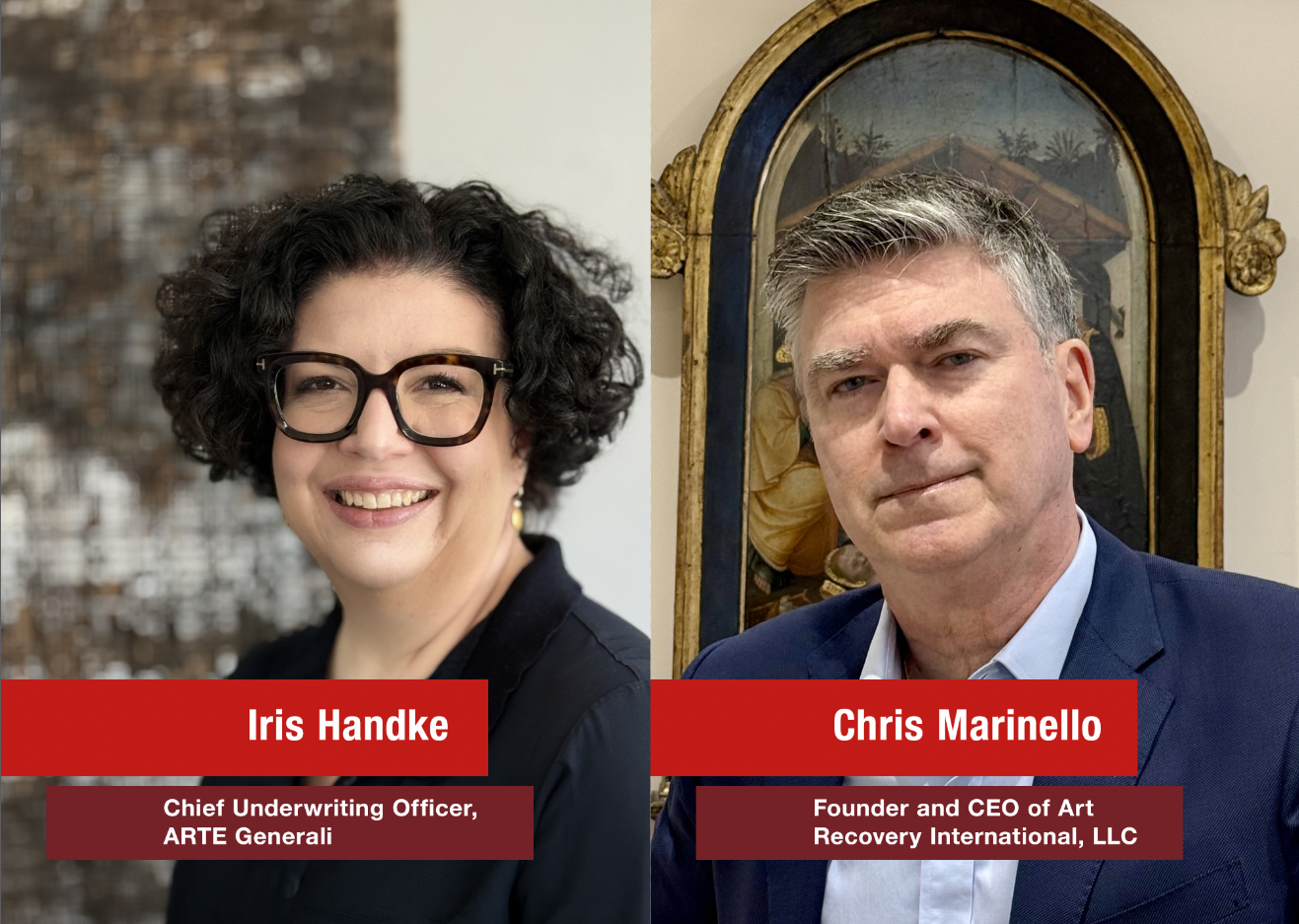
In the following interview, we speak with Iris Handke, Chief Underwriting Officer at ARTE Generali, and Chris Marinello, Founder and CEO of Art Recovery International, about current trends in art-related crime, evolving risk profiles, and the measures required to effectively protect art, cultural heritage, and high-value collections in an increasingly complex security environment.
When did you first notice a significant change in the landscape of museum thefts and thefts from collections?
Chris Marinello: A few years ago, we started to see a dramatic increase in thefts from smaller museums throughout Europe and the UK. Many of these museums had advertised exhibitions featuring gold treasures and/or historic jewellery. This coincided with the rising price of gold, which approached EUR 4,000 per ounce.
Criminals appear to be operating far more aggressively today than in the past. How do these groups typically work, and what distinguishes them from the traditional art thieves of previous decades?
Chris Marinello: I call it the "five-minute heist": there is some planning involved, including scoping out the museum in advance and acquiring the right tools, followed by violently smashing your way into the museum, grabbing the targeted treasures, and getting out before the police can arrive. You can do a lot of damage with a sledgehammer, which is hardly the way art theft is portrayed in the movies.
What are the primary targets today? Are criminals mainly focused on famous works of art, or are they increasingly targeting objects with high intrinsic value, such as gold, jewelry, and precious stones?
Chris Marinello: Theft of gold and precious gems is definitely on the rise, but criminals have not given up on Old Masters, Renoirs, Picassos, Matisses, and other names that are widely known. Anything and everything of value is at risk these days, and criminals, like everyone else, have relatively easy access to online valuation sources that can help them identify what to target.
What role does an object's financial value play in target selection? Are criminals today more motivated by the ability to monetize an item quickly than by the artistic or cultural significance of the work itself?
Chris Marinello: We tend to give criminals too much credit for knowing what to steal, how to steal it, and how to monetise their crimes. Art thieves are often repeat offenders with numerous prior convictions and may have little knowledge of or regard for the cultural significance of an artwork. They are primarily interested in extracting as much money as possible from the crime and concealing the evidence. They may think nothing of breaking up a rare piece of jewellery simply to remove the precious stones for recutting.
How has the risk landscape for museums, exhibitions, and collectors evolved over the past five years?
Iris Handke: Burglaries have become more aggressive, gun violence for example, heavy equipment: as Chris was saying, it's not the goal to be quiet and unnoticed, but to quickly get the maximum out of it and be gone before the security personnel can react. This requires a rethink in terms of security and "defense". Small vulnerabilities become bigger problems when the criminals act so brutally. In addition to the obvious securing of the objects, it seems to me that it is increasingly about active defense.
What new security requirements do you place on museums and lenders today that would not have been considered standard practice just a few years ago?
Iris Handke: We take a closer look at what is insured and whether special measures are required for security due to the nature of the objects. For example, special alarm-monitored and particularly burglar-proof display cases, or transport guarding by specially trained security personnel, designated security personnel for individual items, etc., but also and especially the processes in the museum or on the transports and the interaction of the individual components. A museum is a complex thing, it is not enough to just have a good alarm system. Without excellent mechanics that prevent intrusion, an alarm is of little help. But even if these two components are properly coordinated, they are not effective without smooth and efficient intervention by the security personnel. Everything must work together seamlessly and for this to not only look good on Paper, emergencies must be trained with the staff and the security service providers to ensure the optimal protection of the cultural assets. One must not forget that this is not just about gold or precious stones, but about testimonies of history, about works of art that still influence us today, even though Chris is of course right that this aspect is of little consideration for criminals.
How is ARTE Generali evolving its approach to respond to these emerging threats and changing risk patterns?
Iris Handke: We want to be even better in dialogue with our customers to raise awareness of these risks and to improve the concepts together with them and, if necessary, to adapt them. As we have established, the five minutes heist is presenting a different scenario from the "traditional" one we have in mind and prepare for. We have to factor this into our concepts and resources.
Looking ahead over the next five to ten years, what do you expect to be the biggest challenges in protecting art, cultural assets, and high-value collections?
Chris Marinello: We are already seeing the double-edged sword of artificial intelligence. We recently recovered $15 million worth of stolen artwork for an insurer using a popular AI model. At the same time, criminals can use the same AI services to locate particular works of art in small museums, research their values, and identify nearby sources for the equipment needed for a quick heist. In my view, museum boards everywhere should be addressing the five-minute-heist phenomenon and developing strategies to protect their institutions against it. Funding for the arts has always been tight, and the problem is getting worse. I would like to see museums have more freedom to deaccession and sell duplicate artworks to raise funds for security, as well as greater scope to engage the financially well-heeled private sector through corporate sponsorship of exhibitions. We have to get more creative about how we fund our museums, since governments do not seem likely to open their wallets anytime soon.
Iris Handke: Chris is raising an important point about the dangers and potentials of AI. In order to be up to the challenge of protecting our cultural heritage better now and in the future, we need to be ahead of the development and means criminals are employing to rob museums and private collections alike. This requires an increased exchange between concerned parties and experts to benefit from the knowledge each of them have.